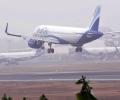
IndiGo, India's largest airline, has recently increased charges for several ancillary services, including infant travel and unaccompanied minors, citing rising operational costs and higher fuel prices. Domestic infant travel charges have risen to Rs 3,000, while unaccompanied minor services are now Rs 5,999 for domestic and Rs 12,999 for international flights.
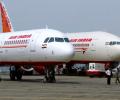
Air India is developing a new in-house 'Vista Digital Platform' for its in-flight entertainment system, set to launch progressively from late 2027. This platform aims to integrate entertainment, loyalty, commerce, and travel services, enhancing passenger experience and boosting ancillary revenues through features like 'commerce-on-map' and personalisation.
India's aviation sector is facing fresh turbulence, with rising fuel costs, the Ministry of Civil Aviation's free-seat directive, and geopolitical disruptions in West Asia clouding near-term earnings visibility.
The Supreme Court has directed the Centre to rationalise airfares and provide relief to flyers, highlighting discrepancies in pricing for the same routes and airlines. The court is addressing a plea seeking a robust regulator to ensure transparency and passenger protection in the civil aviation sector.

Akasa Air, despite facing headwinds from the West Asia conflict and rising aviation turbine fuel prices, expects to maintain a 30-40 per cent growth trajectory over the next five years and aims for an initial public offering (IPO) within two to four years, according to CFO Ankur Goel.
IndiGo, Air India, and SpiceJet are opposing the government's directive to offer 60% of seats for free selection, arguing it will lead to increased airfares to compensate for lost revenue.

A bench of Justices Vikram Nath and Sandeep Mehta termed the exorbitant rise of airfares by airlines as "exploitation" and asked the Centre and the Directorate General of Civil Aviation (DGCA) to file their replies to a PIL seeking binding regulatory guidelines to control the unpredictable fluctuations in airfare and ancillary charges imposed by private airlines in India.
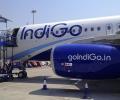
The country's largest airline IndiGo on Wednesday reported a 20 per cent decline in profit after tax at Rs 2,176.3 crore for the June quarter as airspace curbs and overall challenging operating environment crimped its bottom line even as the carrier flew 12 per cent more passengers during the period.
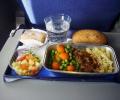
From croissants to Galouti kebabs and Medu vada, Indian carriers, both low-cost and full-service, are revising their in-flight menus to offer passengers a differentiated fare as competition is heating up amid the boom in air travel with the waning of Covid-19. On Monday, Air India, which was taken over by the Tata Group on January 27, unveiled its new domestic in-flight menu comprising gourmet meals, new appetizers, desserts, and local dishes. Air India's economy class passengers would now be served dishes such as Mushroom cheese omelette, Dry jeera aloo wedges, and Garlic tossed spinach and corn for breakfast, and Vegetable biryani, Malabar chicken curry, and mixed vegetable poriyal for lunch.
Airlines are slashing salaries and re-negotiating vendor contracts as drastic fall in passengers has hurt revenue. Go First has cut staff salaries by around 16 per cent while IndiGo and SpiceJet are enforcing a leave without pay (LWP) policy and pay by the hour structure respectively to prune expenses. Vistara, which reversed pay cuts for junior staff including managers and cabin crew in March, is not touching employee salaries at the moment and instead focusing on vendor renegotiation and maximising cargo revenue. An Air India executive said efforts are on to pay salaries by 7th or 8th of June.

The practice of charging for such facilities was launched in 2008.

The practice of charging for ancillary services on domestic flights is likely to grow as competition soars.
Domestic airlines are preparing to offer lower fares for passengers without check-in bags in a move to improve seat occupancy and market share. IndiGo chief executive officer Ronojoy Dutta indicated the airline's interest to offer zero bag fares in an interaction with Bloomberg. Regulatory caps on fares and capacity related to Covid-19 have prevented IndiGo from taking a decision and the airline is discussing the issue with the government, he said.
Vistara started allowing passengers to book an extra seat from Tuesday. IndiGo and SpiceJet, too, are in the final stages of designing such a product to be sold as an add-on.
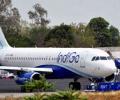
The revised policy, which has come into effect since last week, means passengers who are looking to skip the long queues at airports will have to shell out a fee for it. For IndiGo, the lowest seat fees is Rs 100 while for SpiceJet it is Rs 99.
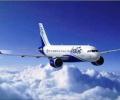
Days after low-cost carrier AirAsia announced it would launch its India operations by the end of the year, IndiGo Airlines President Aditya Ghosh, 38, tells Sudipto Dey in an interaction why his airline is not one that should be worried.

While global majors like JetBlue, RyanAir, Southwest sell almost 90 per cent of their tickets through their own websites or apps, airlines in India have a minuscule share of around 25 per cent through direct channel booking.

The airline pitches its product and service, keeps silent about price in a new campaign as it looks to win over young business travelers.

Last year, Air India replaced veg and non-veg sandwiches with veg hot meals on flights
Experts expect a net loss of Rs 26.7 billion for IndiGo and Rs 10.1 billion for SpiceJet in Q1FY21 driven by low traffic volume, low fleet utilisation and poor coverage of fixed costs.
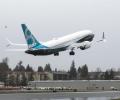
Govt's decision to allow in-flight Wi-Fi doesn't take off with budget airlines, full-service carriers enthused

The market, however, reacted negatively to SpiceJet's announcement and the company's stock dropped by 0.87 per cent as analysts became wary of diversion into a new business during a high fuel price environment.

With cash shortage and plans going awry, the AirAsia owner is looking to cash out of the venture he built with Ratan Tata in 2013.
Some airline sources, however, fear it will reduce overall yields

With economic activities gathering pace post easing of lockdowns across the country, hiring activities in most sectors have shown significant recovery in October over the previous month, says a report. On yearly basis, however, the overall hiring was down by 17 per cent in October, according to the Naukri JobSpeak Index for October' 2020.

Unlike Air India and Jet Airways, which have revised downwards free check-in baggage allowance on domestic flights, GoAir has made provisions for pre-purchasing excess baggage limits.

One smells a rat when cases are settled for too small a price offered either by the highest bidder or the promoter -- within and outside the legal ambit of insolvency process, observes Tamal Bandyopadhyay.

SpiceJet promoter Kalanithi Maran would need to invest at least Rs 1,500 crore (Rs 15 billion) almost immediately to stabilise the airline.

'Defence funding is channelled to State-owned research organisations where scientists are merely bureaucrats holding meetings and sending out minutes of meetings and press releases, but have long ago stopped any innovative work.' 'Unless this tragedy is fixed, India's chances to create world-conquering and job-creating new industries are slim,' says Ajit Balakrishnan.

Maruti, which is majority owned by Suzuki Motors of Japan, pays massive tax, generates huge employment (its staff are almost entirely Indians) and also makes its investors extremely rich. JLR, on the other hand, though owned by Tata has its factories in England and China and in every way (sales, employment, technology) has nothing Indian about it.

Months after take off, Durgapur airport in West Bengal struggles to stay afloat

Despite the headwinds both on the domestic and global fronts, Ramesh S Damani, member, BSE and a prominent investor, says India will weather a global trade war better than a lot of other Asian countries.
